
Introducing Differential Analysis
A new type of hash that localizes and classifies content modifications.
When labeling content, one key requirement is that the content labels are accurate. On the encoding side, this means making sure that the information included in the label is trustworthy. On the decoding side, this means making sure that any significant differences between the original version and the observed version are identified.

Identifying these differences is incredibly important: without it, a bad actor can modify or even completely replace the content, resulting in a misleading (and harmful) content label.
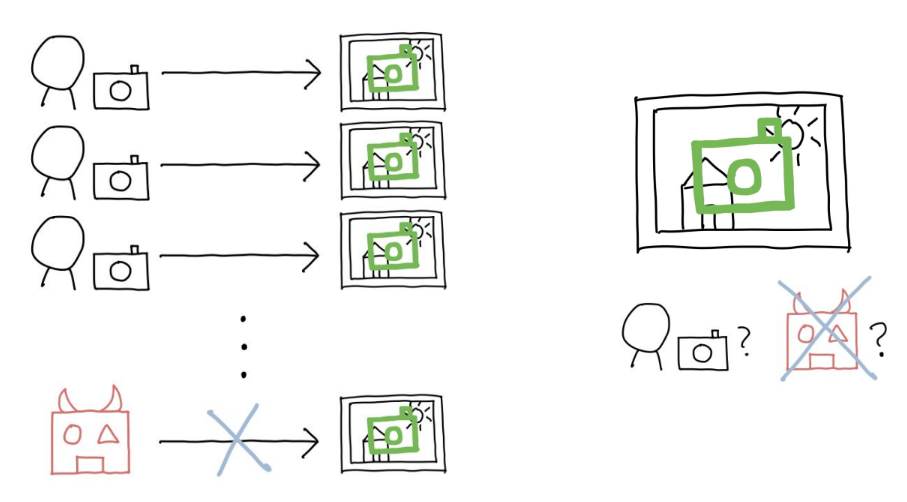
The simplest solution is to add a digital signature to the content label. The digital signature can prove that the content has not been changed since it was signed.
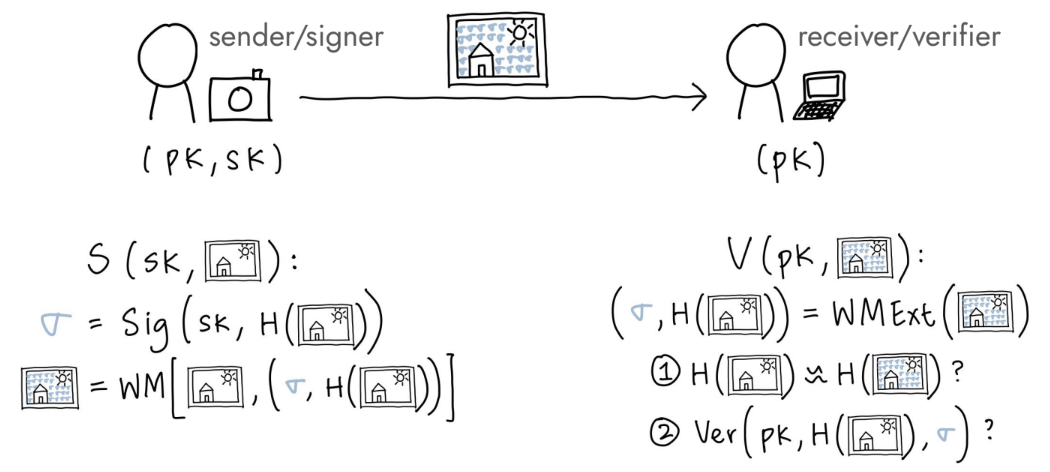
If the content is changed in any way, the digital signature breaks.
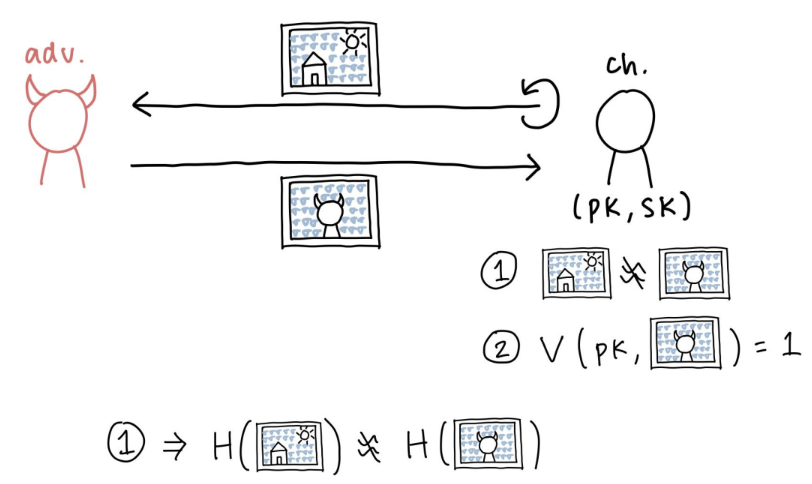
This allows us to (mostly) trust content labels if the digital signatures are intact.
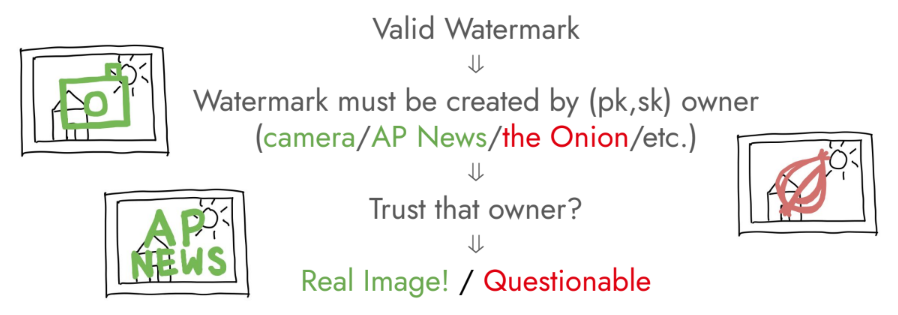
Digital content, however, is often changed in benign ways. When you export a photo from your iPhone, the file format is changed from HEIC to JPEG (in this case, because HEIC is patent-encumbered). When you attach an image to send via email, the file is compressed and likely resized. And when you crop, clip, or apply a color filter, the content is changed.
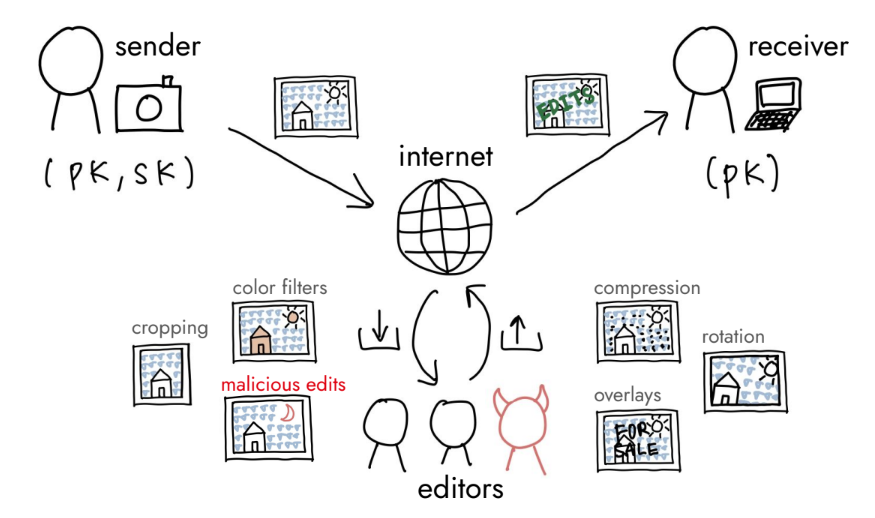
In all of these cases, the digital signature breaks.
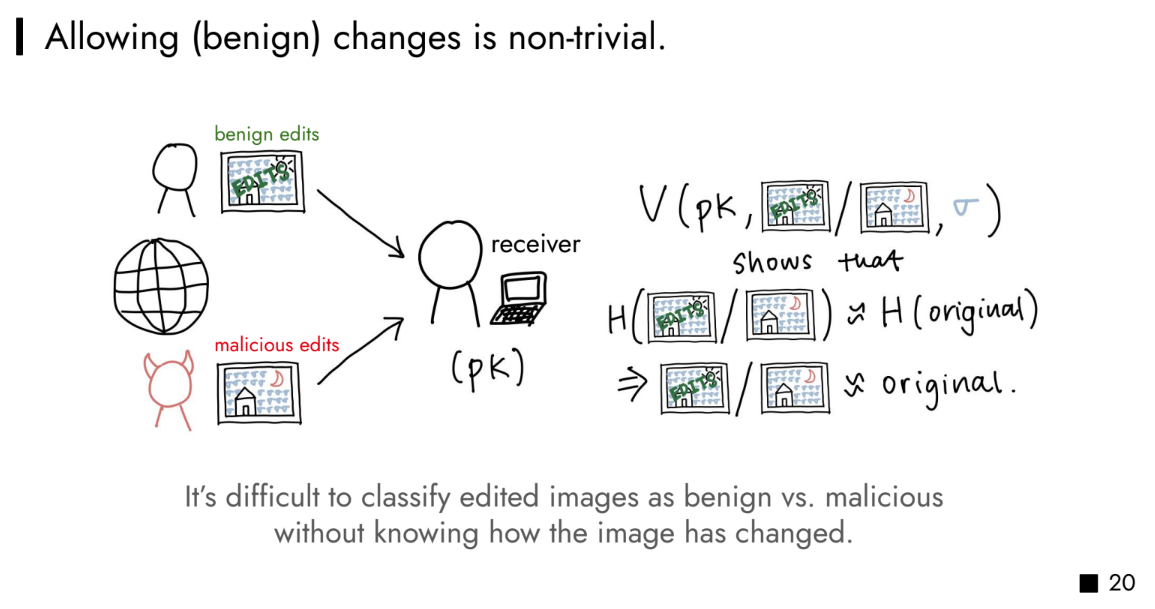
Trufo’s cryptography lab has developed a new type of hash to do exactly this: a differential hash.
While perceptual hashes focus on quantifying how similar two items are, differential hashes focus on identifying differences between two items. As a result, perceptual hashes are most suited for efficiently finding matches in a database (i.e. fingerprinting), such as Google’s reverse image search and YouTube’s copyright infringement detection. In contrast, differential hashes are most suited for localizing and classifying any modifications made after the match has been found.
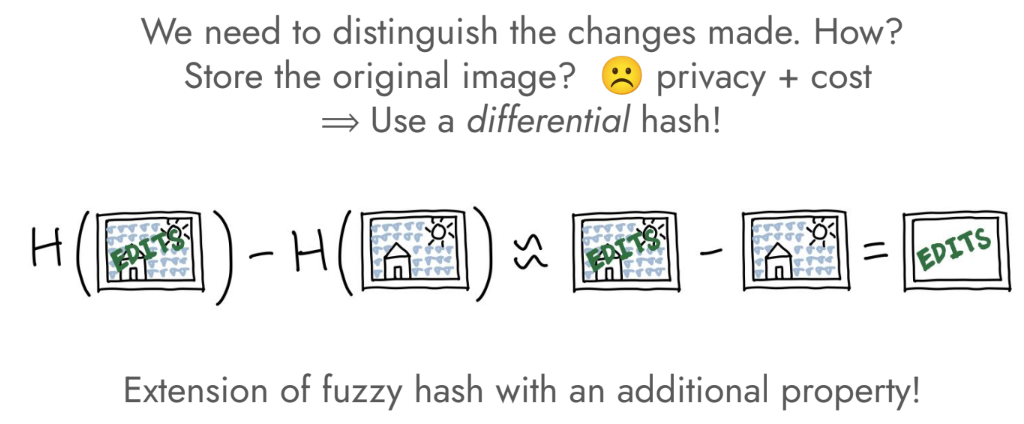
We use this new invention, along with other tools, to provide differential analysis.
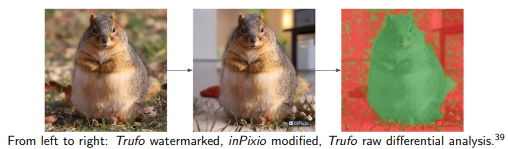
As a result, you can quickly see where and what changes have been made — without the privacy concerns of storing (with Trufo or with anyone else) a copy of the original.
And lastly, this means that the authenticity of your content is not completely reliant on every individual and every application that touches your published content to correctly validate and reapply a series of digital signatures. Even if the provenance chain is broken, Trufo’s differential analysis will still work.